Farm show report
Jan. 15th, 2026 09:00 am![[personal profile]](https://www.dreamwidth.org/img/silk/identity/user.png) which_chick
which_chickThe PA Farm Show Complex is huge and a day at the Farm Show is a day full of walking. We did 18K steps according to Lala's watch. There was a lot of stuff to see and do, and we did some of it.
First off, let's start with Why Is The Farm Show A Big Deal? PA is a 'rustbelt' state in the mid-Atlantic. Why the fuck does it have such a sprawlingly huge Farm Show when it is clearly not a Farm State?
Wrong, bucko. Pennsylvania is indeed a Farm State.
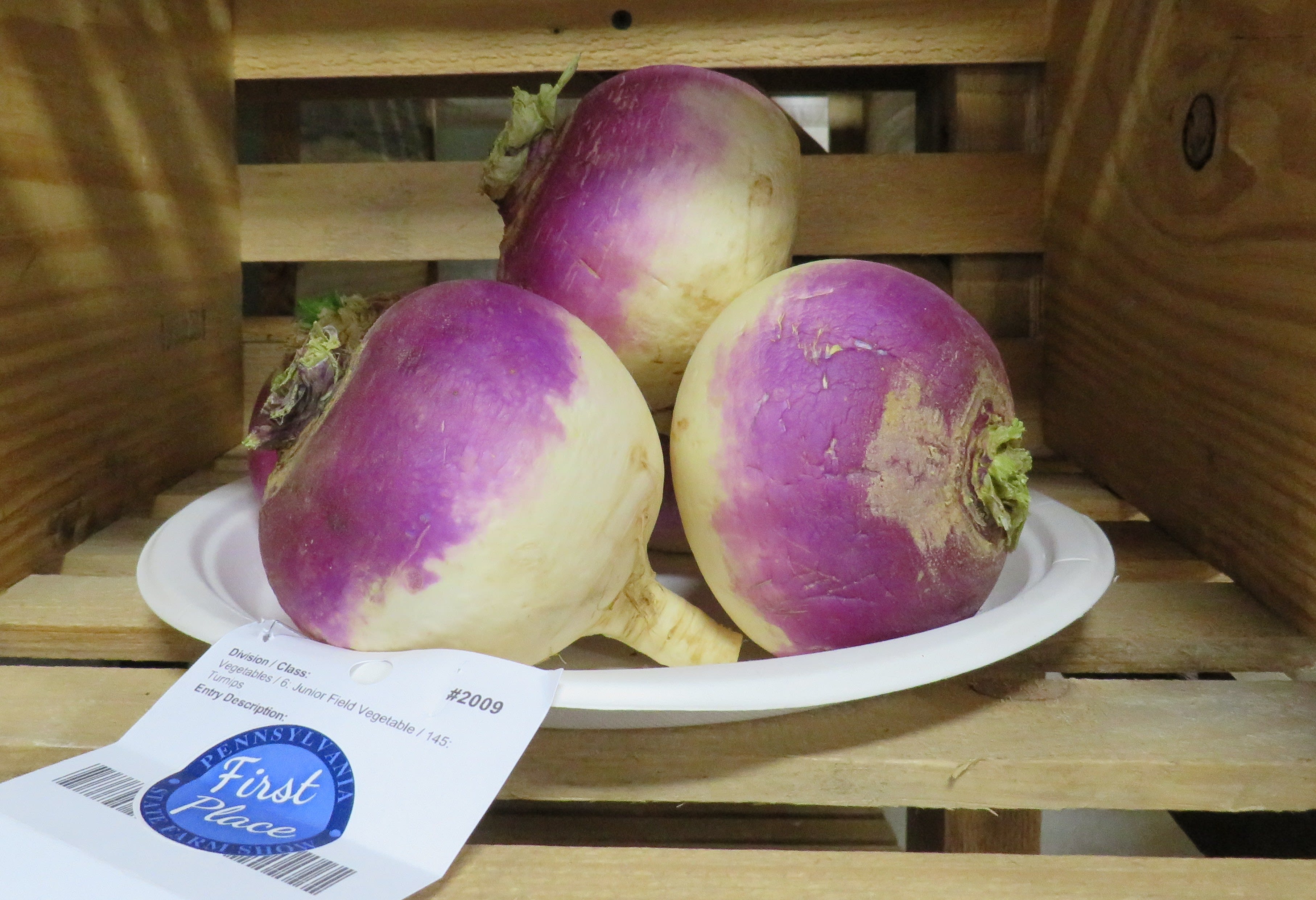
Look, turnips!
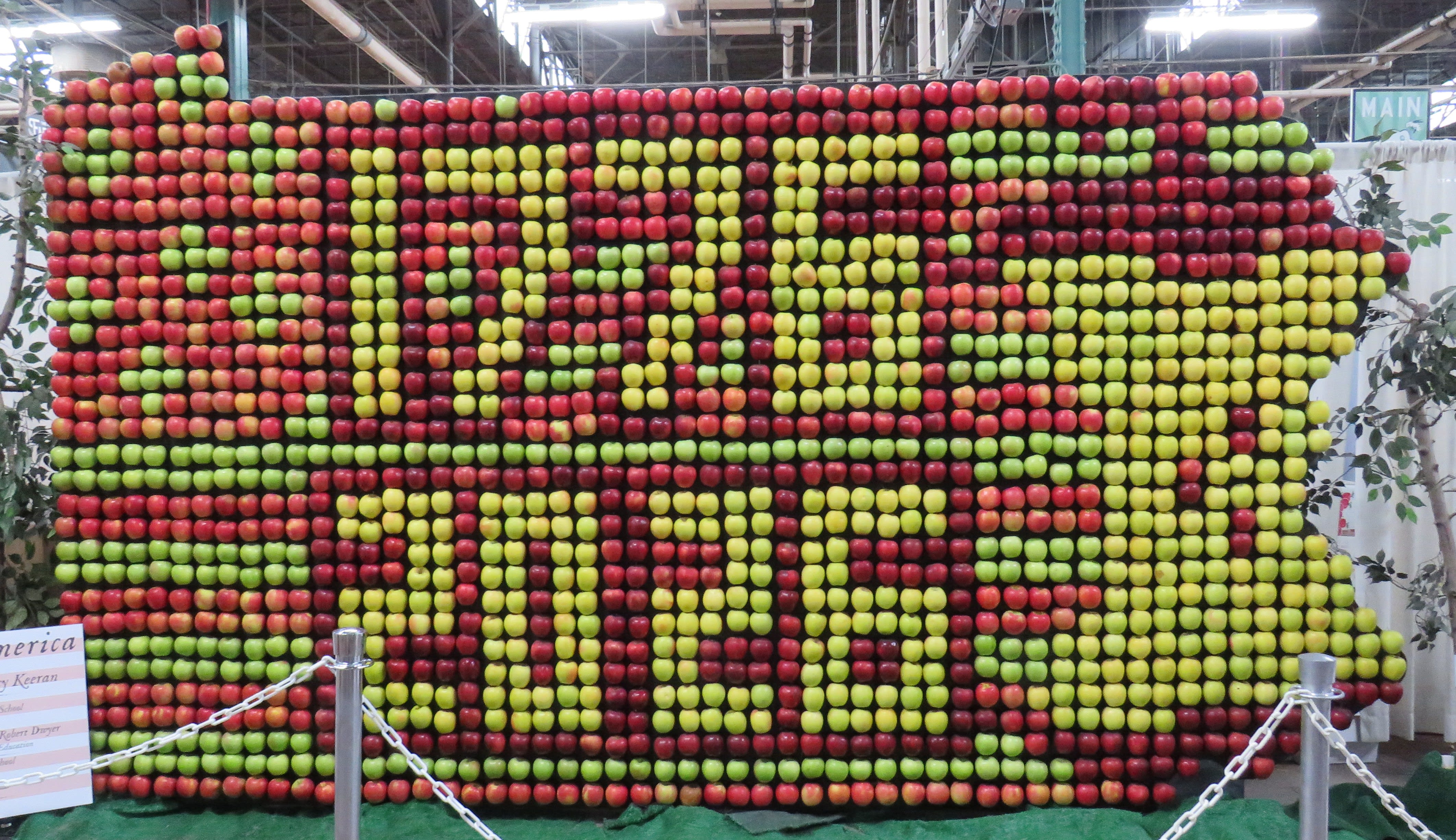
Pennsylvania is the #2 apple producing state in the union, behind Washington on the left coast. (LOL) The Pennsylvania apple people made a Pennsylvania-shaped flag of apples which was kind of awesome so I took a picture of that.
I really like PA apples but I love Winesaps the best and they were not a featured sort of apple because other people do not understand what I want in an apple.
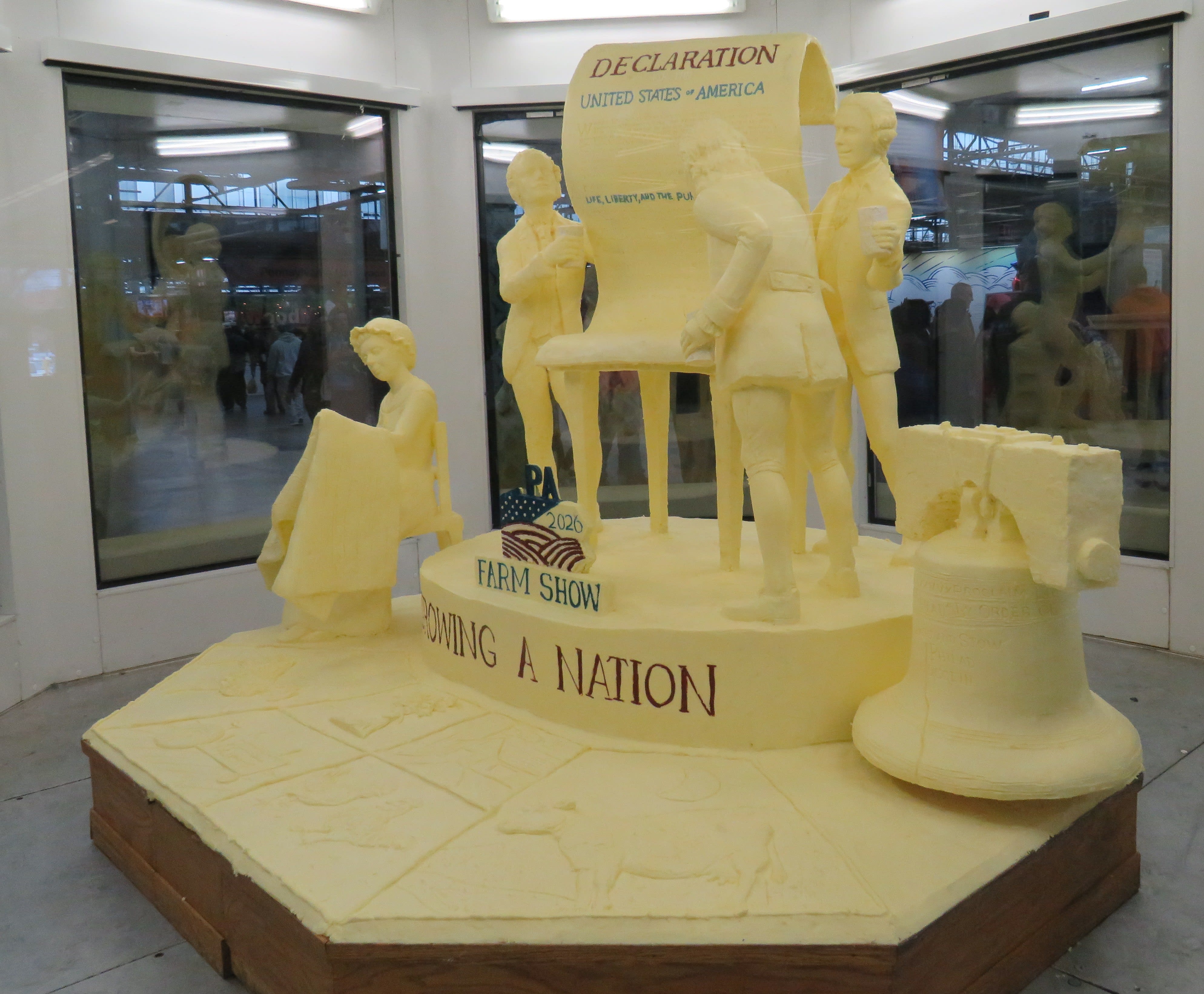
Pennsylvania has a good-sized dairy industry, 7th in the nation, producing about 4.6% of the national total. The Farm Show has a lot of cows on display (real ones). There's also a butter sculpture.
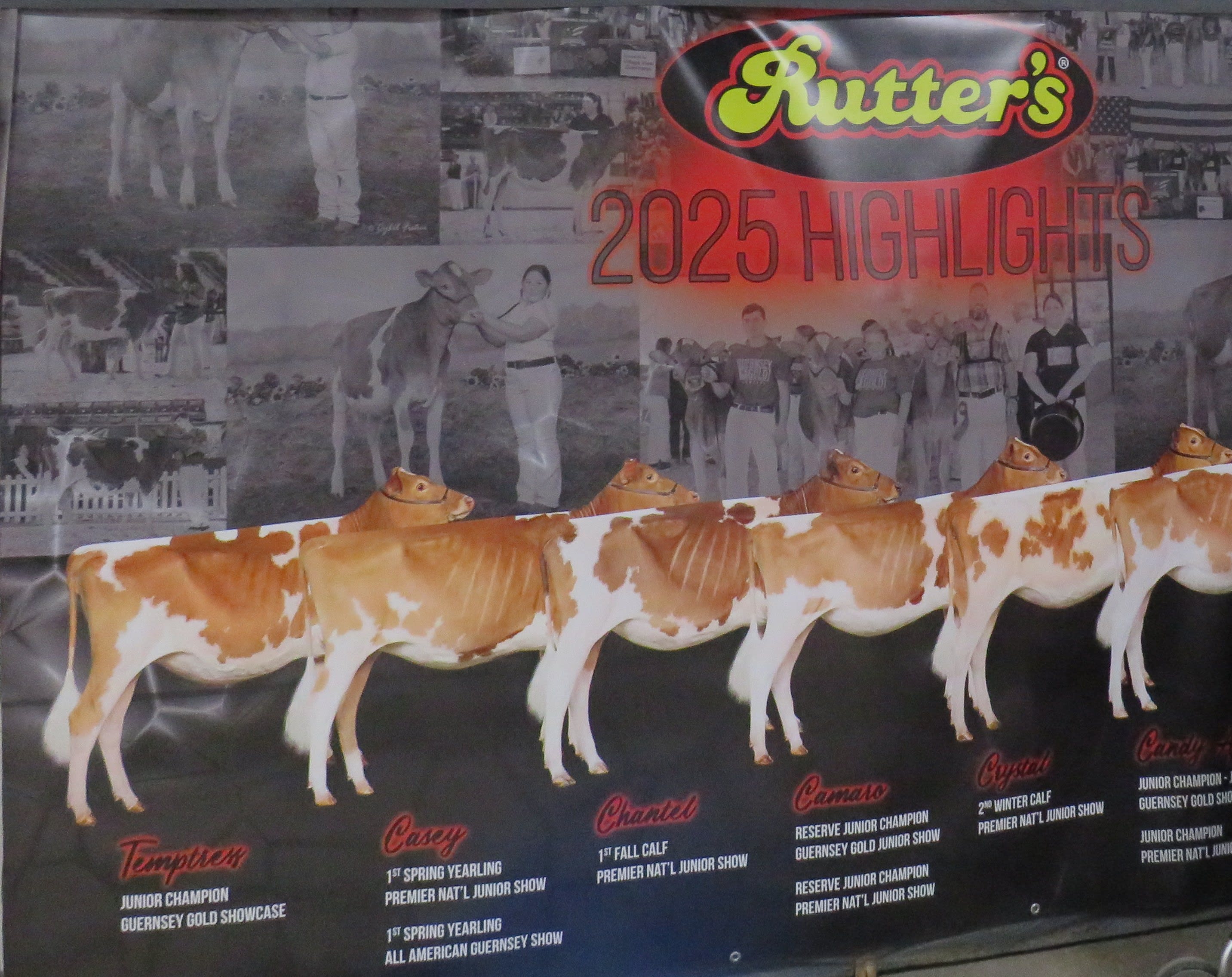
Of particular interest on the dairy front, since the Rutter's convenience stores are invading the heartland of Sheetz country (where I live), was discovering that Rutter's is big into Guernsey show cows. Not, like, dicking around with it for promos or something. Rutter's started as a dairy and the Rutter family has raised Guernsey cows and showed them for generations and they still have damn nice cows, which the family still raises and shows at the state and national level. Good for them.
Pennsylvania produces literally shitbuckets of mushrooms, about 69% of all US production so, by way of maths, they are #1 in mushroom production. This mushroom growing takes place largely in the dark out in Chester County (near Philly). If you live in the US, you have probably eaten mushrooms from Pennsylvania.
Pennsylvania is the leading producer of hardwoods for export in the nation. (Oak, maple, cherry, walnut, etc. Not any pine product.) You know who imports all that hardwood? China. It's China. My tenant who works at Blue Triangle (local hardwood lumber mill) said that the market stuttered pretty good over the summer due to tariff bullshit. I haven't checked back to see if it's recovered, but he's paying the rent so I guess he's still got a job.
PA is also 5th in the nation for maple syrup production, another tree-related crop. The maple syrup people had a stand and were selling maple syrup goodies, including maple syrup caramel popcorn, which I had some of. It was delicious.
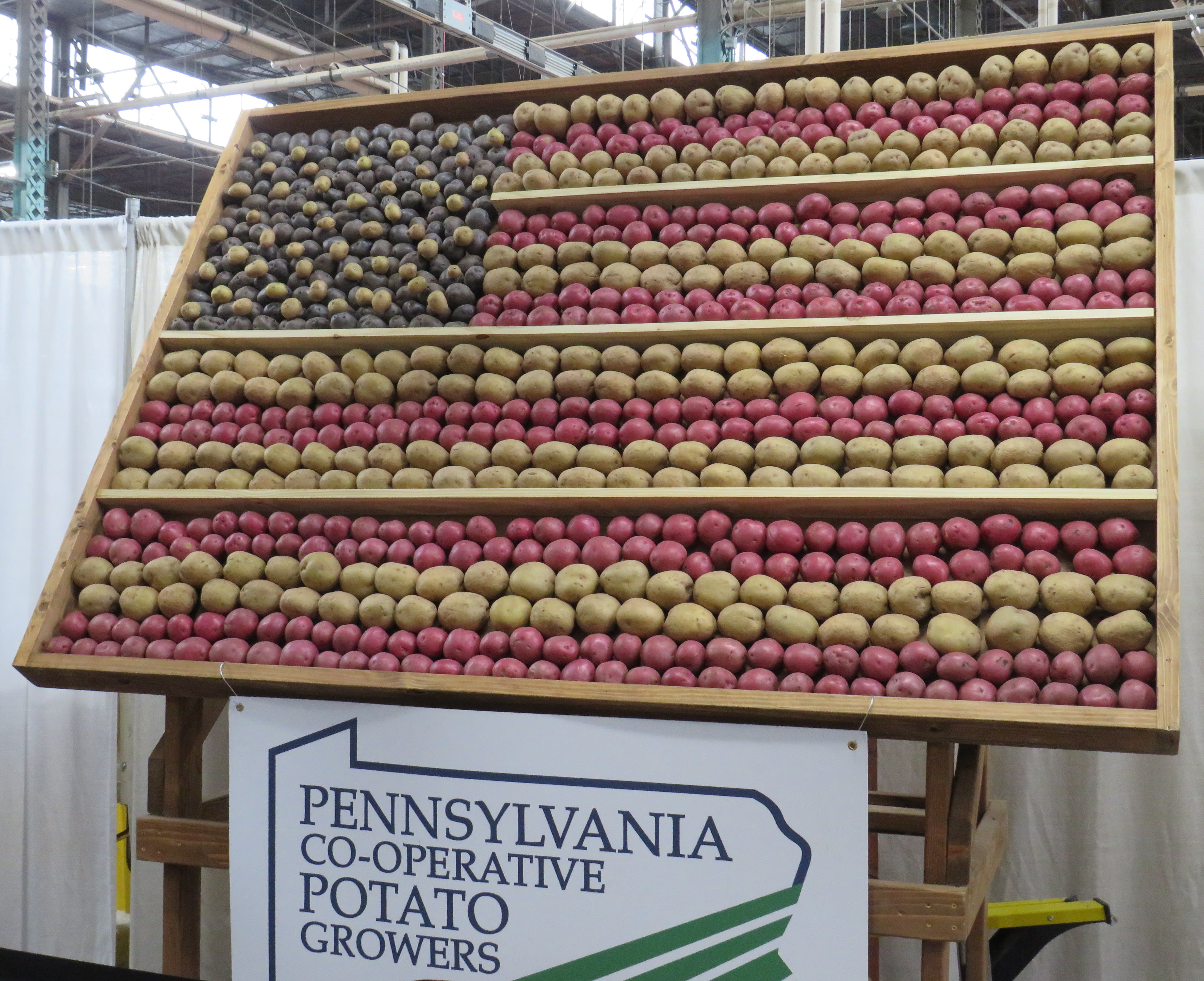
Pennsylvania grows potatoes. These are largely used for making potato chips and as a state, PA has more chip companies than any other state in the nation, mostly in the southern part of the state (York, Lancaster). As an example, Utz is a PA chip company (largest privately held snack brand in the US) and if you have some desire, interest, or need to eat potato chips, the Grandma Utz (plain flavor) potato chips are my personal favorite, highly recommended and preferred above all others. They are fucking outstanding potato chips. The potato industry is not... huge like Idaho or something but it does exist and brings money into the state, mostly as potato chips. The potato booth sold potato donuts -- I bought a plain one and they were excellent.
Also look at this amazing Potato Flag:
Additionally, PA grows grapes and is like 7th in the country for wine production. I think they're trying to grow the wine industry, there was a lot of wine-related stuff on display at the Farm Show and people selling wines and stuff. I'm not a huge wine drinker and neither is Lala so we kind of skidded past that.
All righty then, enough of Fun Ag Facts About PA. We went (ostensibly) to see the sheep-to-shawl competitions. How were they?
The youth competition had 3 teams, one from Butler and two from "Near Harrisburg" -- Dauphin county or thereabouts. Each team has five members. There's a weaver, three spinners, and a carder. (Adult competition teams have 6 people and the competition starts with shearing the sheep -- the sixth person is the shearer and that's all they do. But youth teams start with the fleece off the sheep.)
Sheep to Shawl is largely a matter of arranging supply chains from fleece to woven product. It's a three hour competition, so there aren't... "exciting parts" so much as there is steady and organized production of precursor materials and stuff. To discuss this meaningfully you are going to need to know some basics about how wool fabric is made. There will be spinning and weaving terminology but I'll try to keep things kind of basic.
1. Fleece + carding = fiber
2. Fiber + spinning = weft yarn
3. Weft yarn + weaving = shawl
As you can see, the first step of production once the fleece is off the sheep is to card the fleece into orderly, fluffy fiber suitable for spinning. Now, in the beginning of the competition, everybody is carding, not just the carder. This is because without fluffy fiber to spin, the spinners and the weaver would have to sit idle for a while. Not an efficient use of time, plus also the machinery needed for carding is inexpensive and easy to operate. (Hand cards or hand combs for each person carding, no moving parts, ten minutes of instruction is plenty to learn the gig and generate usable consistent work product.)
Once there is a stockpile of fluffy ready-to-spin fiber, the lead spinner starts to spin, initiating Step 2 of the process. (Everybody else, including the weaver, is still carding at this time.) The lead spinner is your best spinner, most efficient and fastest. Spinning wheels are more complicated and expensive than hand cards. (If your hand cards were $40.00 for a pair, your spinning wheel was probably $400 if you bought it new.) Your spinners need to be decently consistent at spinning and it's not a thing people can master in ten minutes. Spinning is reasonably skilled labor.
Once the lead spinner has completed "enough" of a spindle of weft yarn (the spindle holds a ton of yarn but the weaver only needs a shuttle full so doing full spindles is inefficient), that yarn gets moved (by someone who is not lead spinner -- once lead spinner is spinning, lead spinner KEEPS spinning) to a shuttle for the weaver. Once the weaver has a shuttle, they can get under way with the weaving.
Somewhere along about this time, the second spinner peels off of carding and goes to start spinning too. (Weavers burn through weft yarn pretty fast and you need several spinners to keep the weaver occupied once they get going.) The other two carders keep carding, with the third spinner also serving as "mover-arounder-of-spindles-and-stuff" and generally facilitating the process of getting weft yarn to the weaver in a timely manner.
Weaving is complicated to explain but I'm going to try anyway.
Woven fabric is made of "longways" threads called warp and "crossways" threads called weft.
On a loom (the machine for making fabric by weaving) the warp threads are pre-installed by the weaver before any active weaving. Warp threads are rolled onto the warp roller (away from the weaver on the other side of the loom) and threaded through little thread harnesses called heddles and through the beater bar (used to scrunch the warp yarn tight) to the cloth roller (near the weaver). The warp threads are kept relatively snug by tension between the warp roller and the cloth roller.
Anyway. For sheep-to-shawl, the looms are already threaded at the start of the competition because it's huge time sink and pain in the ass that nobody wants to watch. What the weaver is doing at sheep-to-shawl is putting weft threads between the warp threads. However, it's important to remember that there is also a lot of non-active weaving that gets done to set everything up for the active weaving part.
In active weaving on a mechanical loom, the weaver does the following steps:
1. push down on some pedals to raise one or more heddle frames. These heddle frames lift a selection of warp threads up above the other warp threads. The space between the raised warp threads and the regular warp threads is called the shed
2. The weaver throws the shuttle containing the weft yarn from one side of the shed to the other. This carries the weft yarn across all the threads in the warp.
3. The weaver uses the beater bar to scrunch the weft yarn up against the existing fabric that's already been made.
The weaver alternates throws of the shuttle from left to right on the first throw and then from right to left on the next throw. They push down on different pedals to lift different warp threads and make patterns in the fabric as they weave. Occasionally they will have to adjust the loom rollers to move more warp thread out for them to work on while winding up some of the finished cloth onto the cloth roller. Weaving is skilled work and the loom costs an order of magnitude(ish) more than a spinning wheel. If you have a $400 wheel, it's probably a $2500 loom at the lower end. (You can do way, way better on all of these items if you buy used.)
For sheep-to-shawl, the weaver is making a fabric that MUST be 20" side to side... so they are using up 20" of weft yarn per throw of the shuttle and they can do multiple throws a minute. The completed shawl length needs to be 75 inches (or something -- it's in the rules) and that does not count fringe. If you are very observant you are now thinking ... fringe is just excess unwoven warp strings, isn't it? Correct. Fringe is made up of warp strings.
I do not know the criteria for judging on sheep-to-shawl but they give out assorted awards for things like best spinner, best weaver, competitor's choice, etc. And obviously, best completed shawl.
Everybody in the youth competition got their shawls done by the time limit. We didn't have time to stay for all the adult competition but they also all got their shawls done as well.
Most of the spinning wheels were vertical style modern ones though there wasn't a lot of preference for two pedal or one pedal drives. A lot of Louet, Kiwi, that style of thing. I think the compact vertical wheels are easier to transport which is why they were more prevalent than the four legged "traditional" style wheels.
Oh, and the adult teams largely had super-cute names.
Mutton But Trouble
Time Warp
Loominati
The Baaaa-d Girls
Friends Thru Fiber
For the love of Ewe
Sheep Thrills
Fleece Lightning
Lamb Fam
Baahd Company
There's youtube coverage of the event if you want to see it instead of reading my scintillating prose.
I took my knitting along but did not get very much knitting done because there was way too much to see and do and also I can't really knit in the car even though I want to believe that I can. *sigh*
But that was the farm show. It was busy but fun.
First off, let's start with Why Is The Farm Show A Big Deal? PA is a 'rustbelt' state in the mid-Atlantic. Why the fuck does it have such a sprawlingly huge Farm Show when it is clearly not a Farm State?
Wrong, bucko. Pennsylvania is indeed a Farm State.
Look, turnips!
Pennsylvania is the #2 apple producing state in the union, behind Washington on the left coast. (LOL) The Pennsylvania apple people made a Pennsylvania-shaped flag of apples which was kind of awesome so I took a picture of that.
I really like PA apples but I love Winesaps the best and they were not a featured sort of apple because other people do not understand what I want in an apple.
Pennsylvania has a good-sized dairy industry, 7th in the nation, producing about 4.6% of the national total. The Farm Show has a lot of cows on display (real ones). There's also a butter sculpture.
Of particular interest on the dairy front, since the Rutter's convenience stores are invading the heartland of Sheetz country (where I live), was discovering that Rutter's is big into Guernsey show cows. Not, like, dicking around with it for promos or something. Rutter's started as a dairy and the Rutter family has raised Guernsey cows and showed them for generations and they still have damn nice cows, which the family still raises and shows at the state and national level. Good for them.
Pennsylvania produces literally shitbuckets of mushrooms, about 69% of all US production so, by way of maths, they are #1 in mushroom production. This mushroom growing takes place largely in the dark out in Chester County (near Philly). If you live in the US, you have probably eaten mushrooms from Pennsylvania.
Pennsylvania is the leading producer of hardwoods for export in the nation. (Oak, maple, cherry, walnut, etc. Not any pine product.) You know who imports all that hardwood? China. It's China. My tenant who works at Blue Triangle (local hardwood lumber mill) said that the market stuttered pretty good over the summer due to tariff bullshit. I haven't checked back to see if it's recovered, but he's paying the rent so I guess he's still got a job.
PA is also 5th in the nation for maple syrup production, another tree-related crop. The maple syrup people had a stand and were selling maple syrup goodies, including maple syrup caramel popcorn, which I had some of. It was delicious.
Pennsylvania grows potatoes. These are largely used for making potato chips and as a state, PA has more chip companies than any other state in the nation, mostly in the southern part of the state (York, Lancaster). As an example, Utz is a PA chip company (largest privately held snack brand in the US) and if you have some desire, interest, or need to eat potato chips, the Grandma Utz (plain flavor) potato chips are my personal favorite, highly recommended and preferred above all others. They are fucking outstanding potato chips. The potato industry is not... huge like Idaho or something but it does exist and brings money into the state, mostly as potato chips. The potato booth sold potato donuts -- I bought a plain one and they were excellent.
Also look at this amazing Potato Flag:
Additionally, PA grows grapes and is like 7th in the country for wine production. I think they're trying to grow the wine industry, there was a lot of wine-related stuff on display at the Farm Show and people selling wines and stuff. I'm not a huge wine drinker and neither is Lala so we kind of skidded past that.
All righty then, enough of Fun Ag Facts About PA. We went (ostensibly) to see the sheep-to-shawl competitions. How were they?
The youth competition had 3 teams, one from Butler and two from "Near Harrisburg" -- Dauphin county or thereabouts. Each team has five members. There's a weaver, three spinners, and a carder. (Adult competition teams have 6 people and the competition starts with shearing the sheep -- the sixth person is the shearer and that's all they do. But youth teams start with the fleece off the sheep.)
Sheep to Shawl is largely a matter of arranging supply chains from fleece to woven product. It's a three hour competition, so there aren't... "exciting parts" so much as there is steady and organized production of precursor materials and stuff. To discuss this meaningfully you are going to need to know some basics about how wool fabric is made. There will be spinning and weaving terminology but I'll try to keep things kind of basic.
1. Fleece + carding = fiber
2. Fiber + spinning = weft yarn
3. Weft yarn + weaving = shawl
As you can see, the first step of production once the fleece is off the sheep is to card the fleece into orderly, fluffy fiber suitable for spinning. Now, in the beginning of the competition, everybody is carding, not just the carder. This is because without fluffy fiber to spin, the spinners and the weaver would have to sit idle for a while. Not an efficient use of time, plus also the machinery needed for carding is inexpensive and easy to operate. (Hand cards or hand combs for each person carding, no moving parts, ten minutes of instruction is plenty to learn the gig and generate usable consistent work product.)
Once there is a stockpile of fluffy ready-to-spin fiber, the lead spinner starts to spin, initiating Step 2 of the process. (Everybody else, including the weaver, is still carding at this time.) The lead spinner is your best spinner, most efficient and fastest. Spinning wheels are more complicated and expensive than hand cards. (If your hand cards were $40.00 for a pair, your spinning wheel was probably $400 if you bought it new.) Your spinners need to be decently consistent at spinning and it's not a thing people can master in ten minutes. Spinning is reasonably skilled labor.
Once the lead spinner has completed "enough" of a spindle of weft yarn (the spindle holds a ton of yarn but the weaver only needs a shuttle full so doing full spindles is inefficient), that yarn gets moved (by someone who is not lead spinner -- once lead spinner is spinning, lead spinner KEEPS spinning) to a shuttle for the weaver. Once the weaver has a shuttle, they can get under way with the weaving.
Somewhere along about this time, the second spinner peels off of carding and goes to start spinning too. (Weavers burn through weft yarn pretty fast and you need several spinners to keep the weaver occupied once they get going.) The other two carders keep carding, with the third spinner also serving as "mover-arounder-of-spindles-and-stuff" and generally facilitating the process of getting weft yarn to the weaver in a timely manner.
Weaving is complicated to explain but I'm going to try anyway.
Woven fabric is made of "longways" threads called warp and "crossways" threads called weft.
On a loom (the machine for making fabric by weaving) the warp threads are pre-installed by the weaver before any active weaving. Warp threads are rolled onto the warp roller (away from the weaver on the other side of the loom) and threaded through little thread harnesses called heddles and through the beater bar (used to scrunch the warp yarn tight) to the cloth roller (near the weaver). The warp threads are kept relatively snug by tension between the warp roller and the cloth roller.
Anyway. For sheep-to-shawl, the looms are already threaded at the start of the competition because it's huge time sink and pain in the ass that nobody wants to watch. What the weaver is doing at sheep-to-shawl is putting weft threads between the warp threads. However, it's important to remember that there is also a lot of non-active weaving that gets done to set everything up for the active weaving part.
In active weaving on a mechanical loom, the weaver does the following steps:
1. push down on some pedals to raise one or more heddle frames. These heddle frames lift a selection of warp threads up above the other warp threads. The space between the raised warp threads and the regular warp threads is called the shed
2. The weaver throws the shuttle containing the weft yarn from one side of the shed to the other. This carries the weft yarn across all the threads in the warp.
3. The weaver uses the beater bar to scrunch the weft yarn up against the existing fabric that's already been made.
The weaver alternates throws of the shuttle from left to right on the first throw and then from right to left on the next throw. They push down on different pedals to lift different warp threads and make patterns in the fabric as they weave. Occasionally they will have to adjust the loom rollers to move more warp thread out for them to work on while winding up some of the finished cloth onto the cloth roller. Weaving is skilled work and the loom costs an order of magnitude(ish) more than a spinning wheel. If you have a $400 wheel, it's probably a $2500 loom at the lower end. (You can do way, way better on all of these items if you buy used.)
For sheep-to-shawl, the weaver is making a fabric that MUST be 20" side to side... so they are using up 20" of weft yarn per throw of the shuttle and they can do multiple throws a minute. The completed shawl length needs to be 75 inches (or something -- it's in the rules) and that does not count fringe. If you are very observant you are now thinking ... fringe is just excess unwoven warp strings, isn't it? Correct. Fringe is made up of warp strings.
I do not know the criteria for judging on sheep-to-shawl but they give out assorted awards for things like best spinner, best weaver, competitor's choice, etc. And obviously, best completed shawl.
Everybody in the youth competition got their shawls done by the time limit. We didn't have time to stay for all the adult competition but they also all got their shawls done as well.
Most of the spinning wheels were vertical style modern ones though there wasn't a lot of preference for two pedal or one pedal drives. A lot of Louet, Kiwi, that style of thing. I think the compact vertical wheels are easier to transport which is why they were more prevalent than the four legged "traditional" style wheels.
Oh, and the adult teams largely had super-cute names.
Mutton But Trouble
Time Warp
Loominati
The Baaaa-d Girls
Friends Thru Fiber
For the love of Ewe
Sheep Thrills
Fleece Lightning
Lamb Fam
Baahd Company
There's youtube coverage of the event if you want to see it instead of reading my scintillating prose.
I took my knitting along but did not get very much knitting done because there was way too much to see and do and also I can't really knit in the car even though I want to believe that I can. *sigh*
But that was the farm show. It was busy but fun.


no subject
Date: 2026-01-17 02:08 am (UTC)