Springtime, kind of.
Mar. 12th, 2026 06:40 pm![[personal profile]](https://www.dreamwidth.org/img/silk/identity/user.png) which_chick
which_chickIt's been a bit warmer than is typical for March, daytime temps in the 70s (about 21C for non-USians) and nights well above freezing. There is liquid water in the places that get springtime (vernal) liquid water. And we've had some nights that were both warm-ish and rainy, which means... it's time for amphibians!
In the mountains of Pennsylvania's ridge-n-valley province, where I live, we have a couple of Interesting Things in early spring, if you happen to be near the wet. I am near the wet. A lot of the landscape around my home is squishy or outright liquid this time of year, so there are Interesting Things to see.
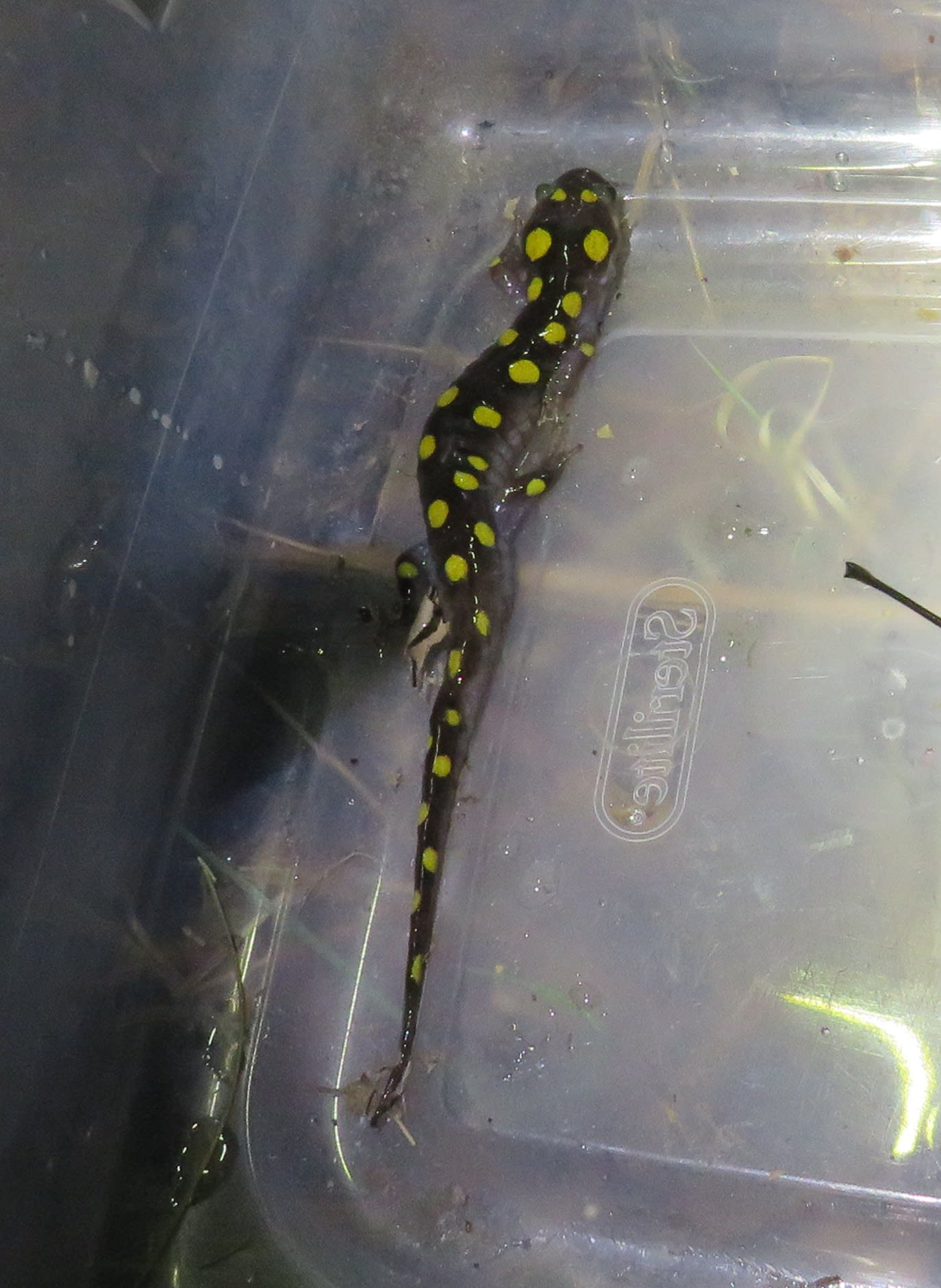
When conditions are right, in the early not-quite-spring, vernal pools in my area feature the spotted salamander (Ambystoma maculatum, wikipedia entry here). The spotted salamander is big (6 inches or about 15 cm) and strikingly colored (black/dark gray with big yellow spots). It's a pretty visible-looking salamander that is not camouflaged at all. Here's a picture of one in a tupperware so that you can see what they look like:
Despite being covered in big yellow spots, the spotted salamander still manages to be mostly unspotted because it spends most of its life underground because that's a great way to not be spotted. (I am chortling with glee.) The staying underground thing is the same How Not To Be Seen strategy also employed by the unspotted (it's just brown and pinkish) Eastern Wormsnake, another infrequently-seen critter that inhabits these parts.
Anyway.
I have lived here pretty much my whole entire life without ever seeing an adult spotted salamander and that seems like a fucking shame. I mean, look at that thing. It's highly visible. Big Yellow Spots, ffs.
I've seen spotted salamander egg masses in vernal pools, but that's as far as I've gotten. I ain't getting any younger (56 in April, how the FUCK did that happen?) and I think it shameful that I live in a place populated by 6" long high-viz black and yellow salamanders that I have never seen in person.
So this year, I made a fucking effort to (a) notice the first warm, wet nights in the spring and (b) truck out to the vernal pools with rubber boots and a tupperware and a net and a flashlight and (c) endeavor to spot the spotted salamanders in person like a goddamn boss.
Yes, this is my best life.
As you may have guessed by the enormous amounts of verbiage and dumb ass sight/spot wordplay (snort!) being thrown about here, I was successful in my quest. Huzzah! (The newt in the tupperware above, that's my picture. I fished one sacrificial newt out of the water to terrorize for a twenty second photo op and then released the newt back into the water physically unharmed but probably psychologically scarred by the experience.)
Now, even when you are in the right location at the right time of year and the right time of night, with a flashlight, it is still relatively difficult to spot these damn things despite them being covered in bright yellow spots. (Can't stop, won't stop.)
*sigh* You think I'm kidding.
I am not.
Look. Try some spotted salamander spotting. There are two newts and a bonus wood frog in this picture:
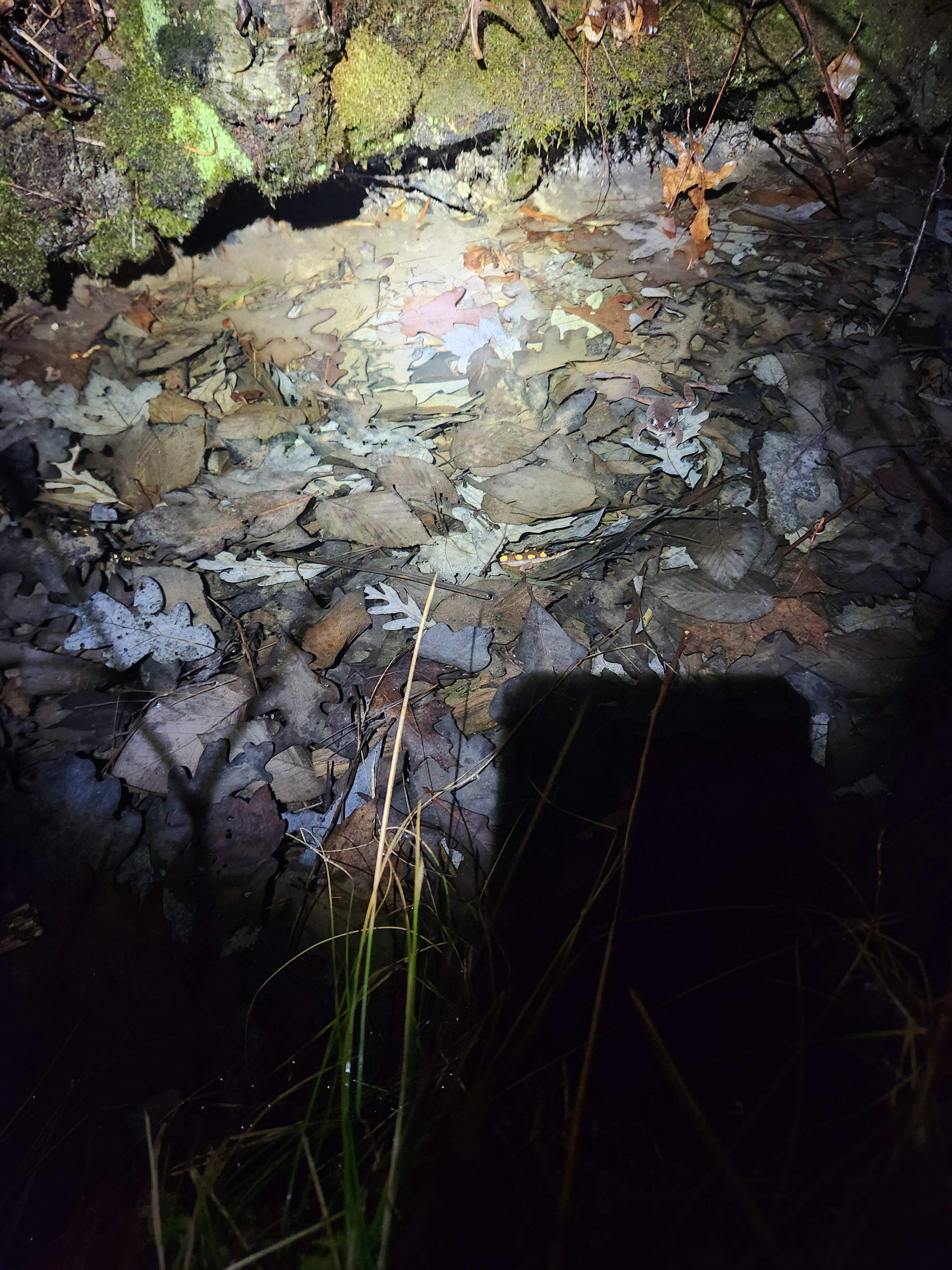
Did you see both newts and the frog? Did you?
I've embiggened the relevant part of the image and circled the amphibians for you...

I'm sure you would like to try some more. :)
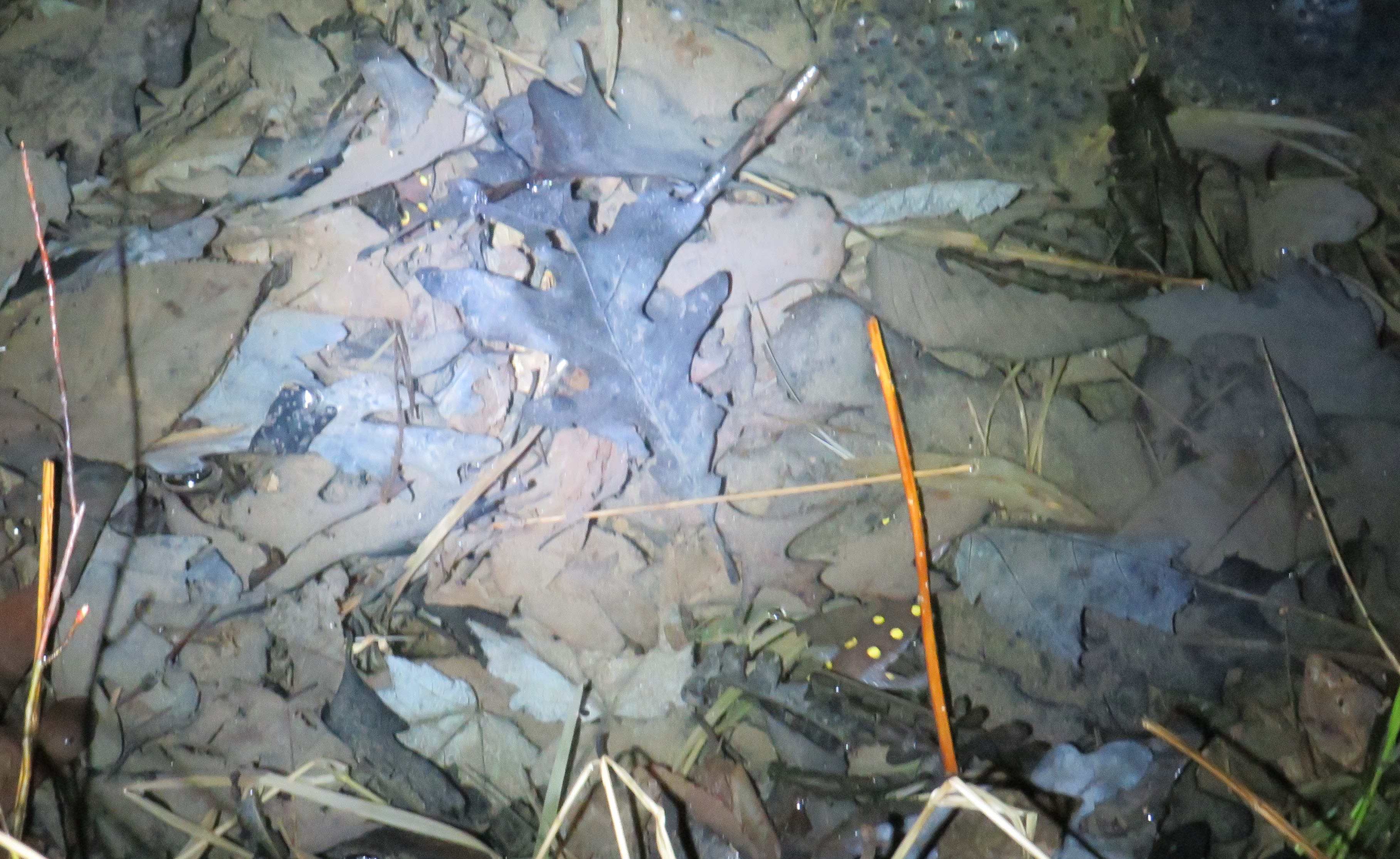
Did you see the second newt? I'm sure that you got the first one, but did you get the second one, above and to the left of the first newt? How about the wood frog egg masses in the upper right?
Here's a newt looking at you from under the log. He's kind of in the middle of the frame.
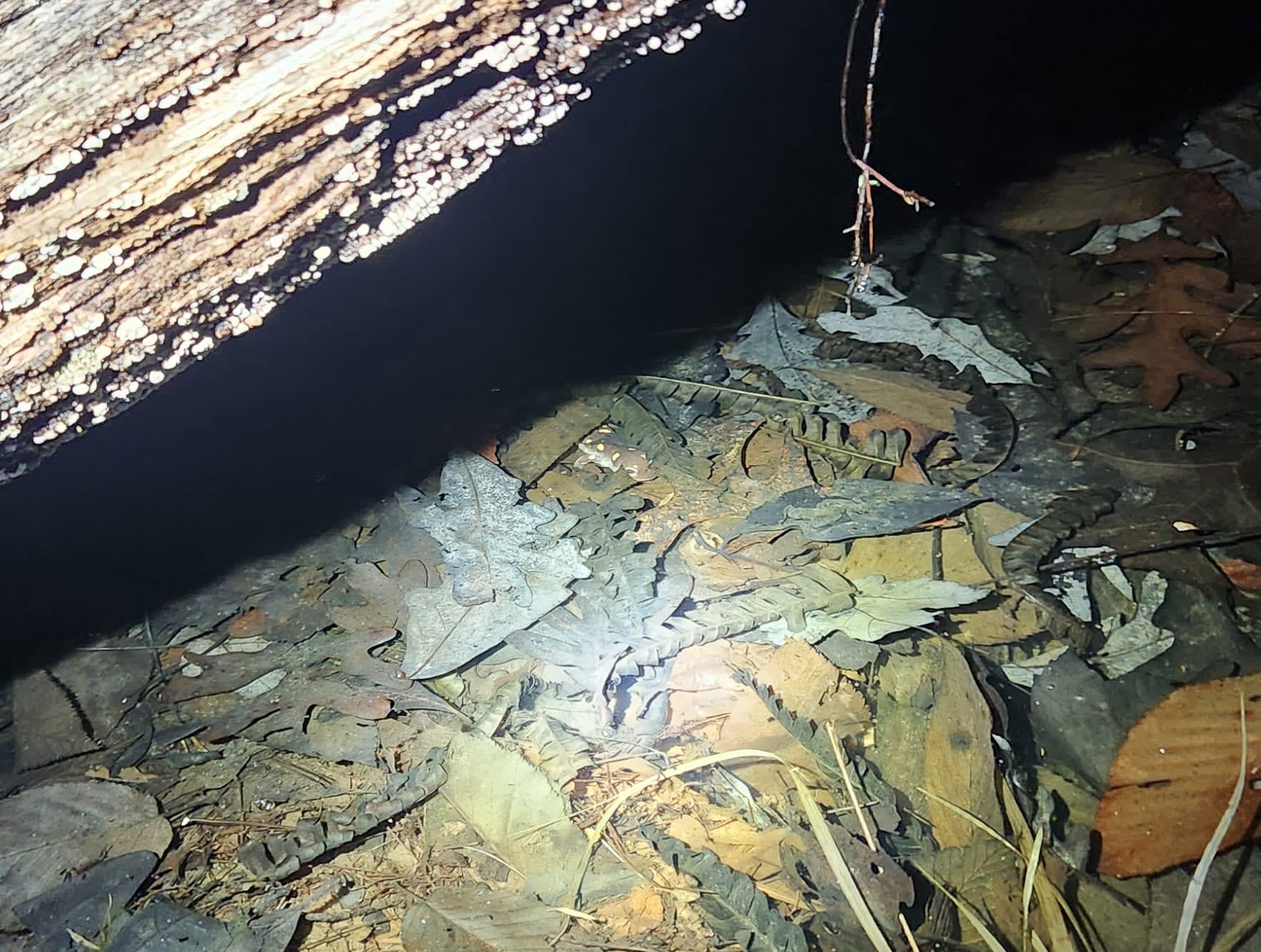
Another one in the middle of the frame
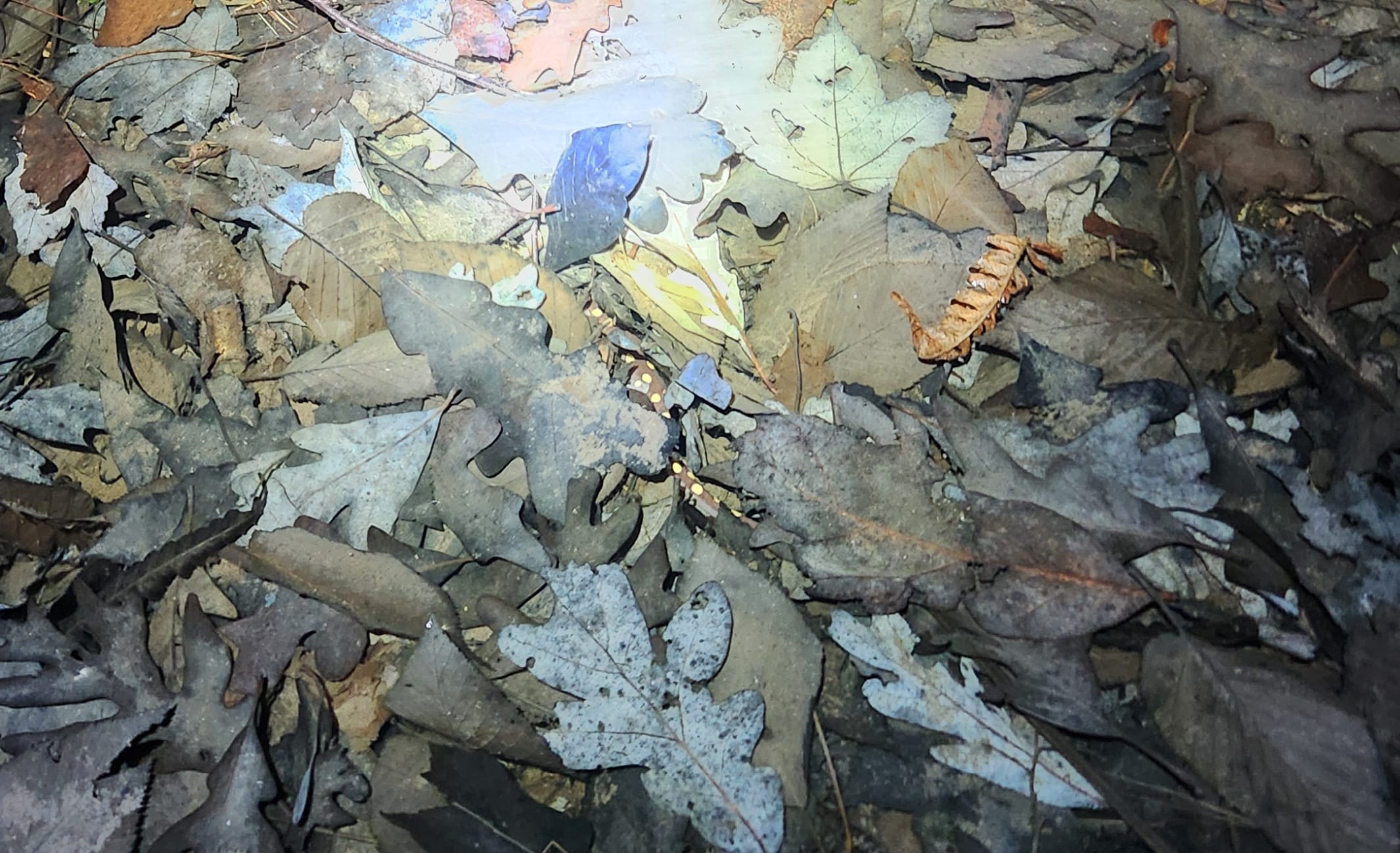
Now, given the fairly Where's Waldo nature of my newt pictures, you might think that looking for newts sucks. While the experience is slightly damp and quite dark and you are out in the rain, the actual looking for the newts part is kind of fun because the newts have to breathe air.
There is no air down in the leaf litter. All that shit's underwater, in the pictures. Unless they want to drown, the newts have to leave the safety of the leaf litter and ascend to the surface for like a second to gulp some air before reburying themselves in safe cover. A hopeful spotted newt spotter can 100% wait there in the dark, holding the flashlight over the last place the leaf litter moved, and eventually the newts will come up to breathe so that they are easily spotted. That part is kind of amazing and neat and wow how did I never see them before, this is fucking awesome. HOWEVER taking pictures of their languid respiration-related surfacing is not easy to do when it's just you out there in the damp dark barely-spring night. (I'm holding a flashlight and a cellphone and trying to keep both of them on the newt for a one-second window of behavior WHILE TAKING A PICTURE... nah, fam, I do not have that coordination or reflexes.) But trust me, in person it's way cooler than still shots.
And that's the spotted salamander, which I have now seen in person. Unlike a lot of other things, spotted newts are totally as cool in person as they sound like they might be.
National Geographic has a nice article about spotting spotted newts, if you want better pictures of the newts and some discussion that doesn't make you trudge through wordplay. It's here and while it didn't inform me at all about the newts, it did remind me to go out on a warm night in early spring, so that was helpful.
In the mountains of Pennsylvania's ridge-n-valley province, where I live, we have a couple of Interesting Things in early spring, if you happen to be near the wet. I am near the wet. A lot of the landscape around my home is squishy or outright liquid this time of year, so there are Interesting Things to see.
When conditions are right, in the early not-quite-spring, vernal pools in my area feature the spotted salamander (Ambystoma maculatum, wikipedia entry here). The spotted salamander is big (6 inches or about 15 cm) and strikingly colored (black/dark gray with big yellow spots). It's a pretty visible-looking salamander that is not camouflaged at all. Here's a picture of one in a tupperware so that you can see what they look like:
Despite being covered in big yellow spots, the spotted salamander still manages to be mostly unspotted because it spends most of its life underground because that's a great way to not be spotted. (I am chortling with glee.) The staying underground thing is the same How Not To Be Seen strategy also employed by the unspotted (it's just brown and pinkish) Eastern Wormsnake, another infrequently-seen critter that inhabits these parts.
Anyway.
I have lived here pretty much my whole entire life without ever seeing an adult spotted salamander and that seems like a fucking shame. I mean, look at that thing. It's highly visible. Big Yellow Spots, ffs.
I've seen spotted salamander egg masses in vernal pools, but that's as far as I've gotten. I ain't getting any younger (56 in April, how the FUCK did that happen?) and I think it shameful that I live in a place populated by 6" long high-viz black and yellow salamanders that I have never seen in person.
So this year, I made a fucking effort to (a) notice the first warm, wet nights in the spring and (b) truck out to the vernal pools with rubber boots and a tupperware and a net and a flashlight and (c) endeavor to spot the spotted salamanders in person like a goddamn boss.
Yes, this is my best life.
As you may have guessed by the enormous amounts of verbiage and dumb ass sight/spot wordplay (snort!) being thrown about here, I was successful in my quest. Huzzah! (The newt in the tupperware above, that's my picture. I fished one sacrificial newt out of the water to terrorize for a twenty second photo op and then released the newt back into the water physically unharmed but probably psychologically scarred by the experience.)
Now, even when you are in the right location at the right time of year and the right time of night, with a flashlight, it is still relatively difficult to spot these damn things despite them being covered in bright yellow spots. (Can't stop, won't stop.)
*sigh* You think I'm kidding.
I am not.
Look. Try some spotted salamander spotting. There are two newts and a bonus wood frog in this picture:
Did you see both newts and the frog? Did you?
I've embiggened the relevant part of the image and circled the amphibians for you...
I'm sure you would like to try some more. :)
Did you see the second newt? I'm sure that you got the first one, but did you get the second one, above and to the left of the first newt? How about the wood frog egg masses in the upper right?
Here's a newt looking at you from under the log. He's kind of in the middle of the frame.
Another one in the middle of the frame
Now, given the fairly Where's Waldo nature of my newt pictures, you might think that looking for newts sucks. While the experience is slightly damp and quite dark and you are out in the rain, the actual looking for the newts part is kind of fun because the newts have to breathe air.
There is no air down in the leaf litter. All that shit's underwater, in the pictures. Unless they want to drown, the newts have to leave the safety of the leaf litter and ascend to the surface for like a second to gulp some air before reburying themselves in safe cover. A hopeful spotted newt spotter can 100% wait there in the dark, holding the flashlight over the last place the leaf litter moved, and eventually the newts will come up to breathe so that they are easily spotted. That part is kind of amazing and neat and wow how did I never see them before, this is fucking awesome. HOWEVER taking pictures of their languid respiration-related surfacing is not easy to do when it's just you out there in the damp dark barely-spring night. (I'm holding a flashlight and a cellphone and trying to keep both of them on the newt for a one-second window of behavior WHILE TAKING A PICTURE... nah, fam, I do not have that coordination or reflexes.) But trust me, in person it's way cooler than still shots.
And that's the spotted salamander, which I have now seen in person. Unlike a lot of other things, spotted newts are totally as cool in person as they sound like they might be.
National Geographic has a nice article about spotting spotted newts, if you want better pictures of the newts and some discussion that doesn't make you trudge through wordplay. It's here and while it didn't inform me at all about the newts, it did remind me to go out on a warm night in early spring, so that was helpful.


no subject
Date: 2026-03-13 02:03 am (UTC)Our newts are orange on the bottom and an orangy brown on top. They crawl fairly long distances over land so are quite visible. Their skin is very poisonous. Don't handle without gloves!!
no subject
Date: 2026-03-13 02:31 am (UTC)